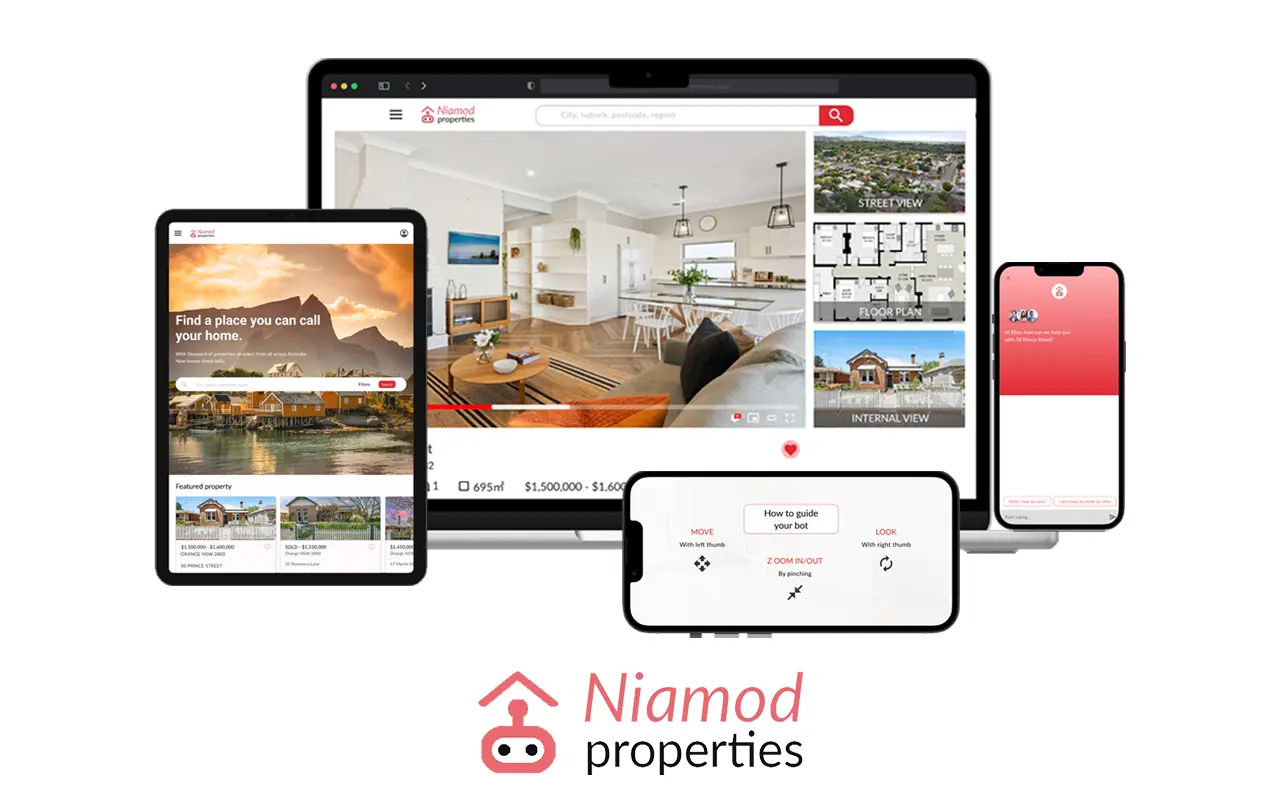
Real estate after the pandemic
Before the pandemic, real estate ran almost entirely face to face. Then it had to adapt fast. Buyers became more tech-savvy and started expecting virtual options, such as pre-recorded footage, so they didn't have to turn up to every inspection.
Niamod, a real estate business, asked us to imagine a virtual tour from the buyer's or renter's side, and to recommend the technology it should be built on.
How might we enable property buyers to remotely attend and inspect properties so that they can find a property quickly and easily?
Testing our own assumption first
We assumed the problem was simple: inspecting in person takes too long. Before designing anything, we had to find out whether that was true. That meant we had to:
- Understand the different kinds of buyers, and choose one to design for
- Learn what virtual tours already exist and how many buyers actually use them
- Work out why those tours weren't meeting people's needs
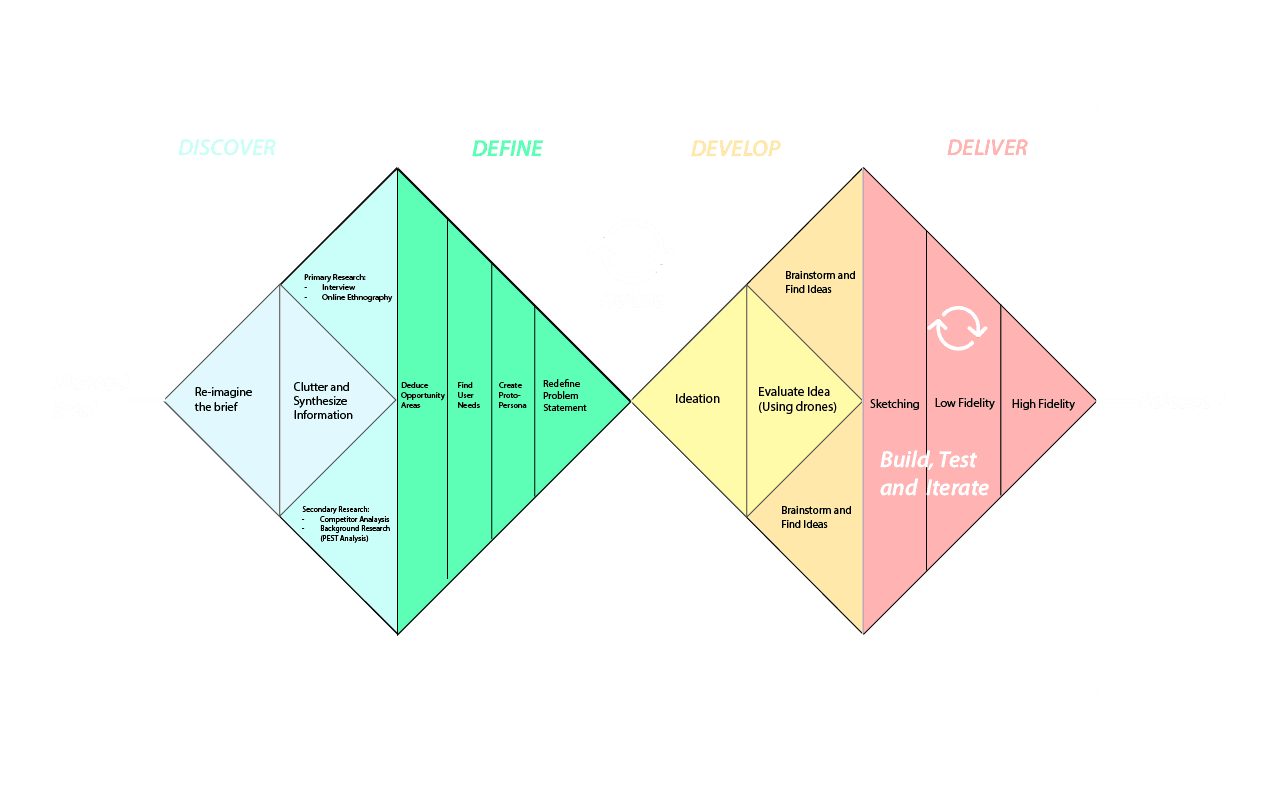
Two diamonds: open, close, open, close
We used the Double Diamond. Open up to explore the problem, narrow down to define it, open up again to explore solutions, then narrow down to deliver one.
Tech, trends and the competition
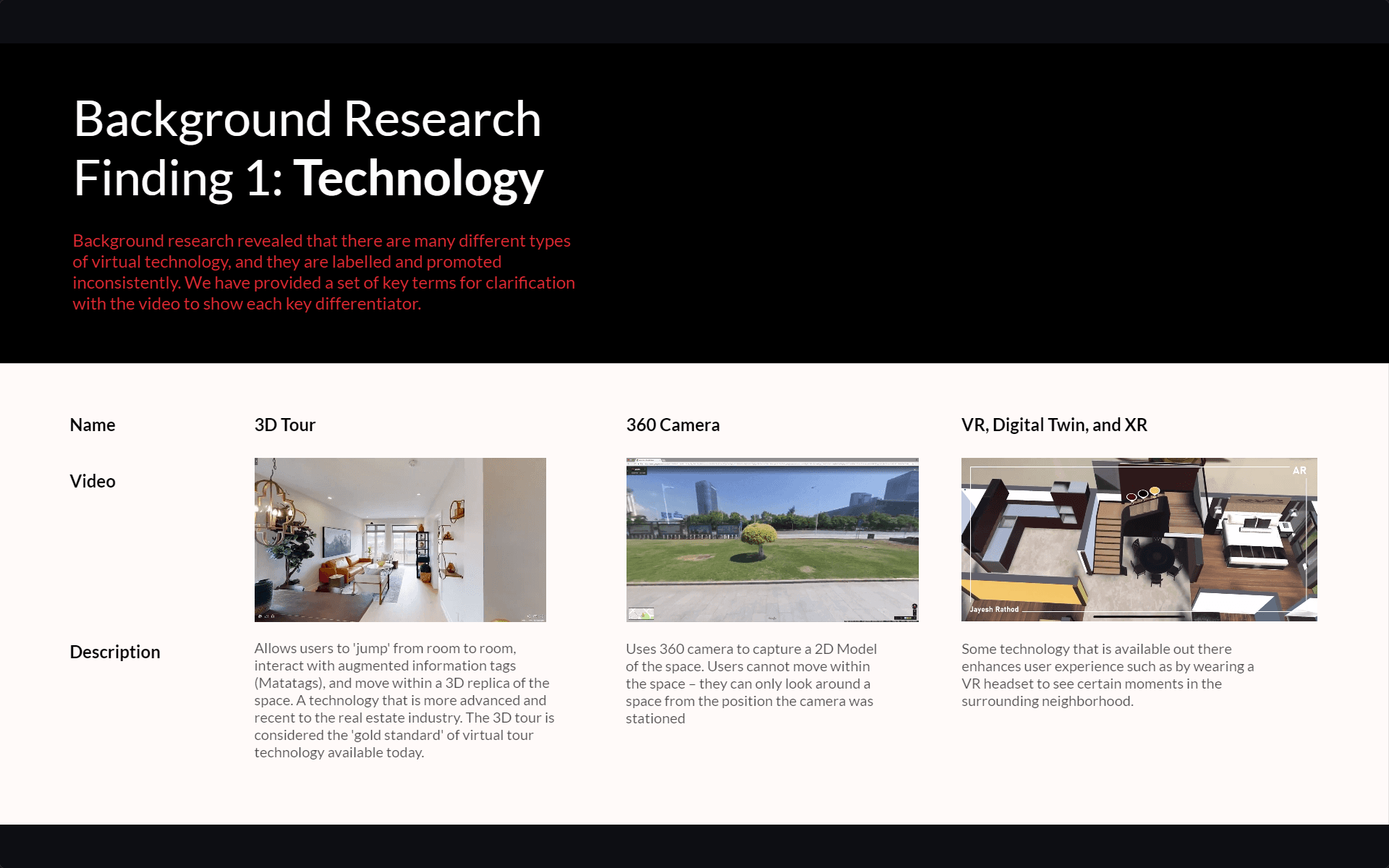
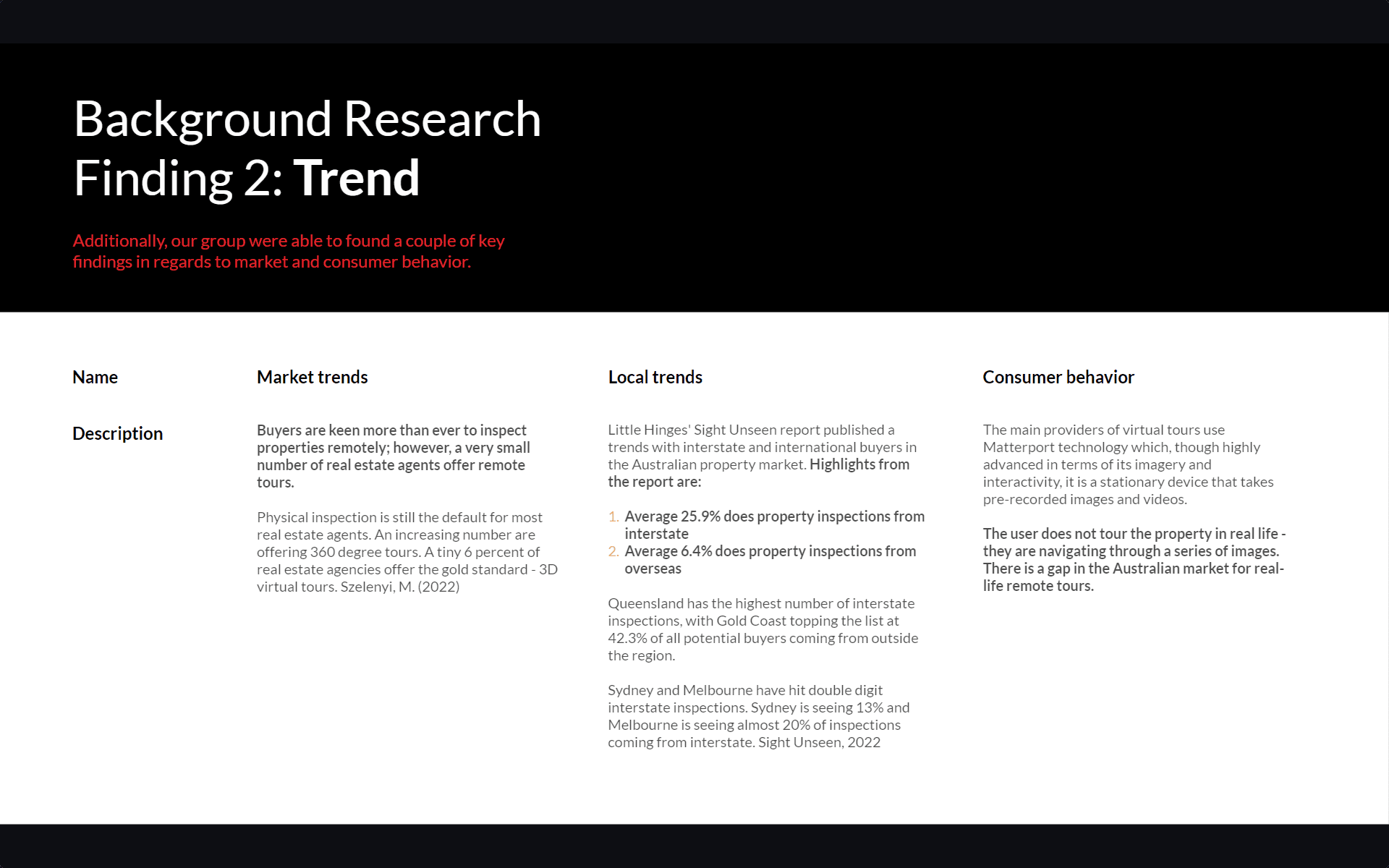
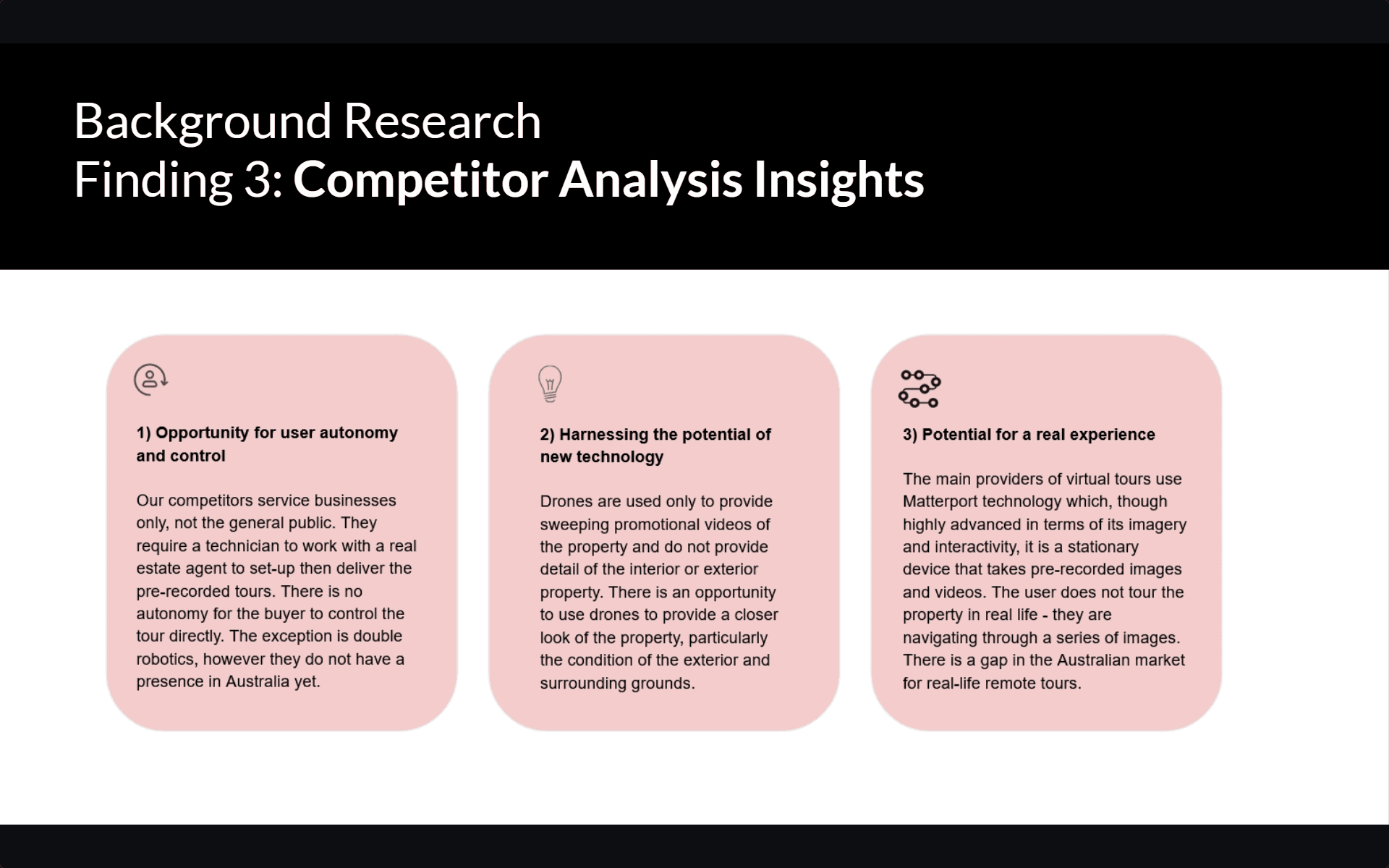
We surveyed the technology, the market and the competition to understand the audience and to find what could give Niamod an edge.
The biggest gap: competitors' tours were pre-recorded, so buyers had no control over what they saw, and the Australian market had room for real-life remote tours.
Meet Paul, Susan and Ellen
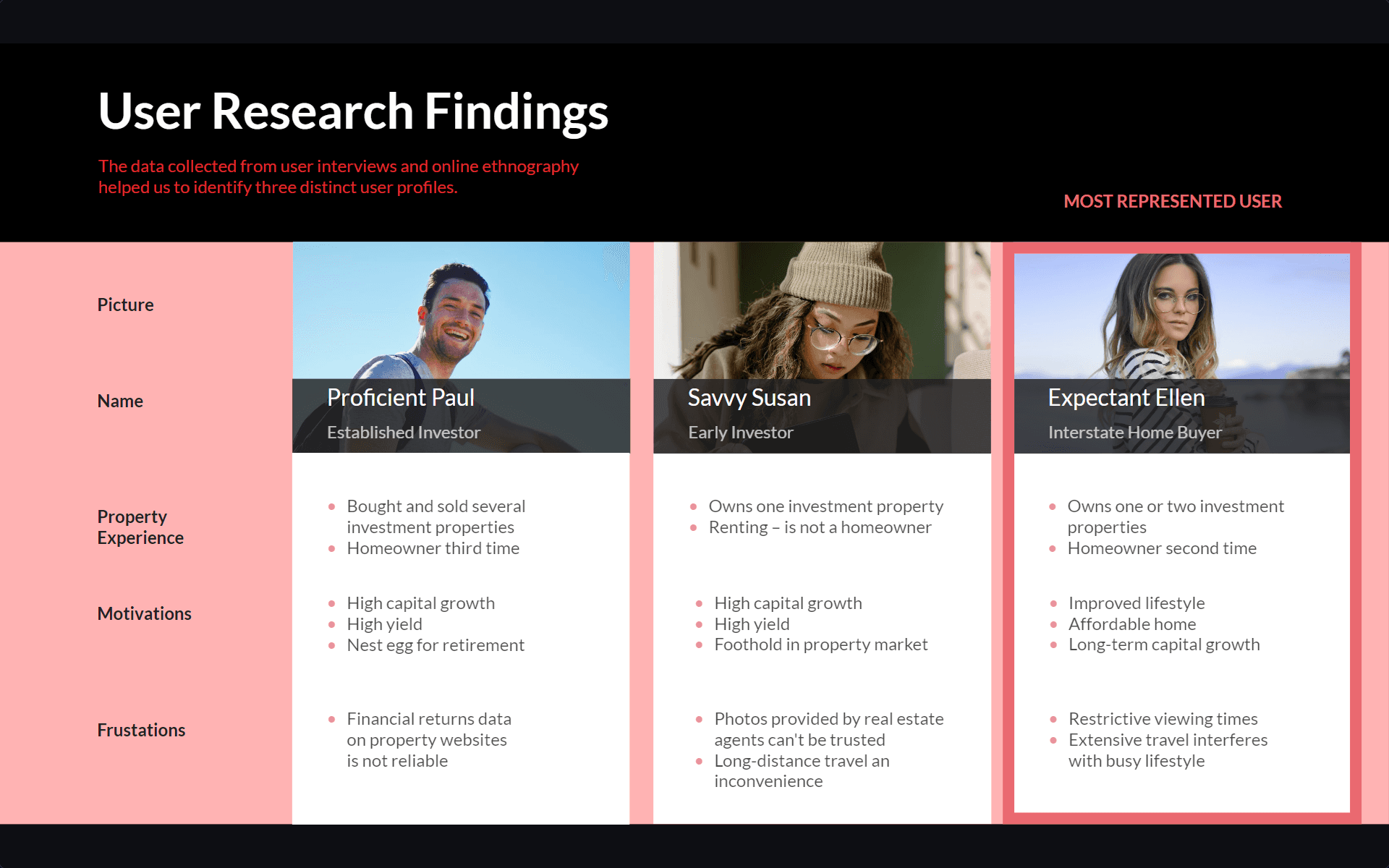
From 5 user interviews and online ethnography, we identified three kinds of buyer:
- Proficient Paul: an established investor
- Savvy Susan: an early investor who still rents
- Expectant Ellen: an interstate home buyer, and the profile we met most often
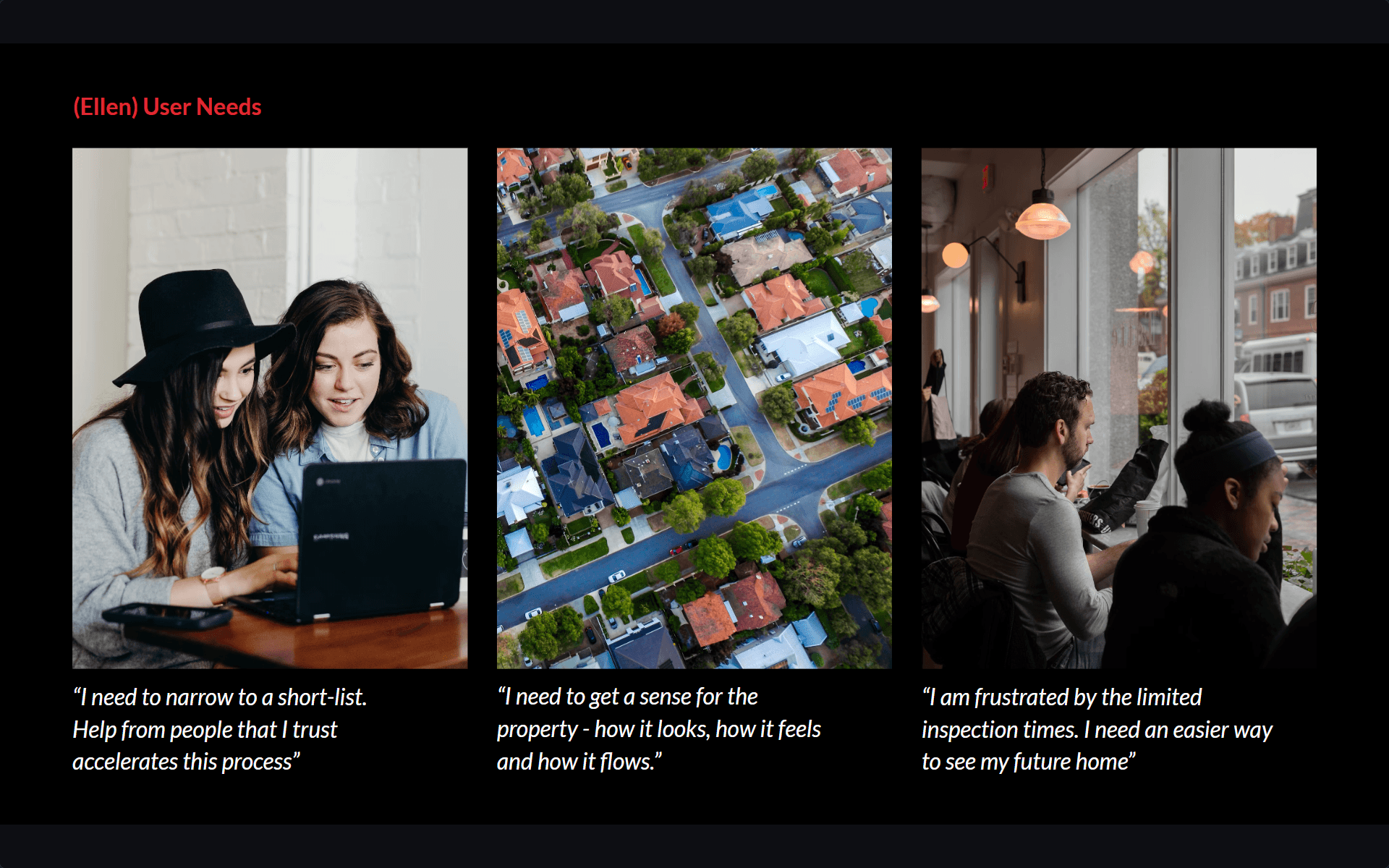
We designed for Ellen. In her words:
- "I need to narrow to a short-list. Help from people that I trust accelerates this process."
- "I need to get a sense for the property: how it looks and how it flows."
- "I am frustrated by the limited inspection times. I need an easier way to see my future home."
Five jobs, three rounds of design
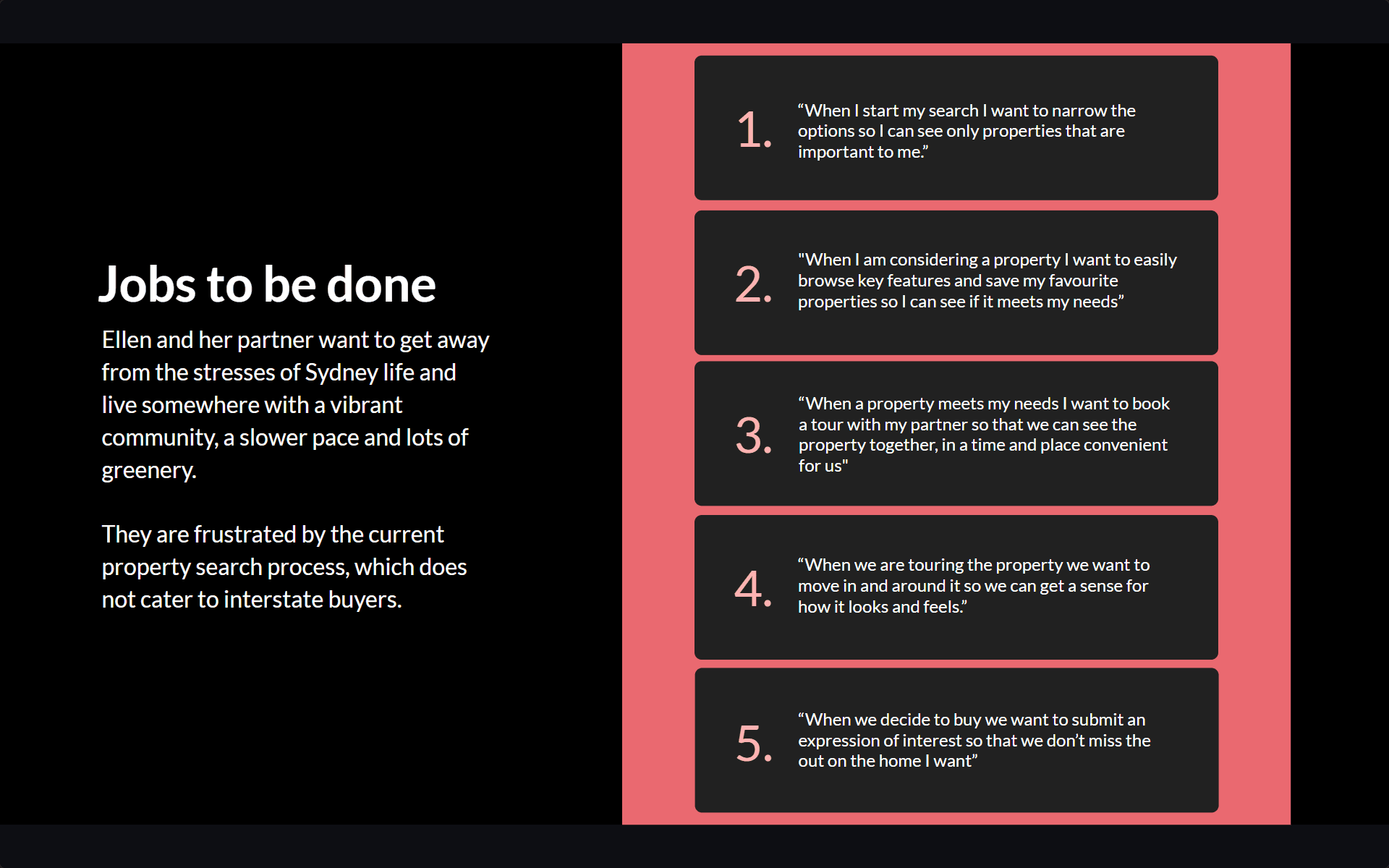
Ellen and her partner want to leave the stress of Sydney for somewhere slower and greener, but the property search process doesn't cater for interstate buyers. We turned that into five jobs to be done:
- Narrow down the options to properties that matter.
- Browse key features and save favourites.
- Book a tour together, at a time and place that suits.
- Move around during the tour to get a sense of the place.
- Submit an expression of interest without missing out.
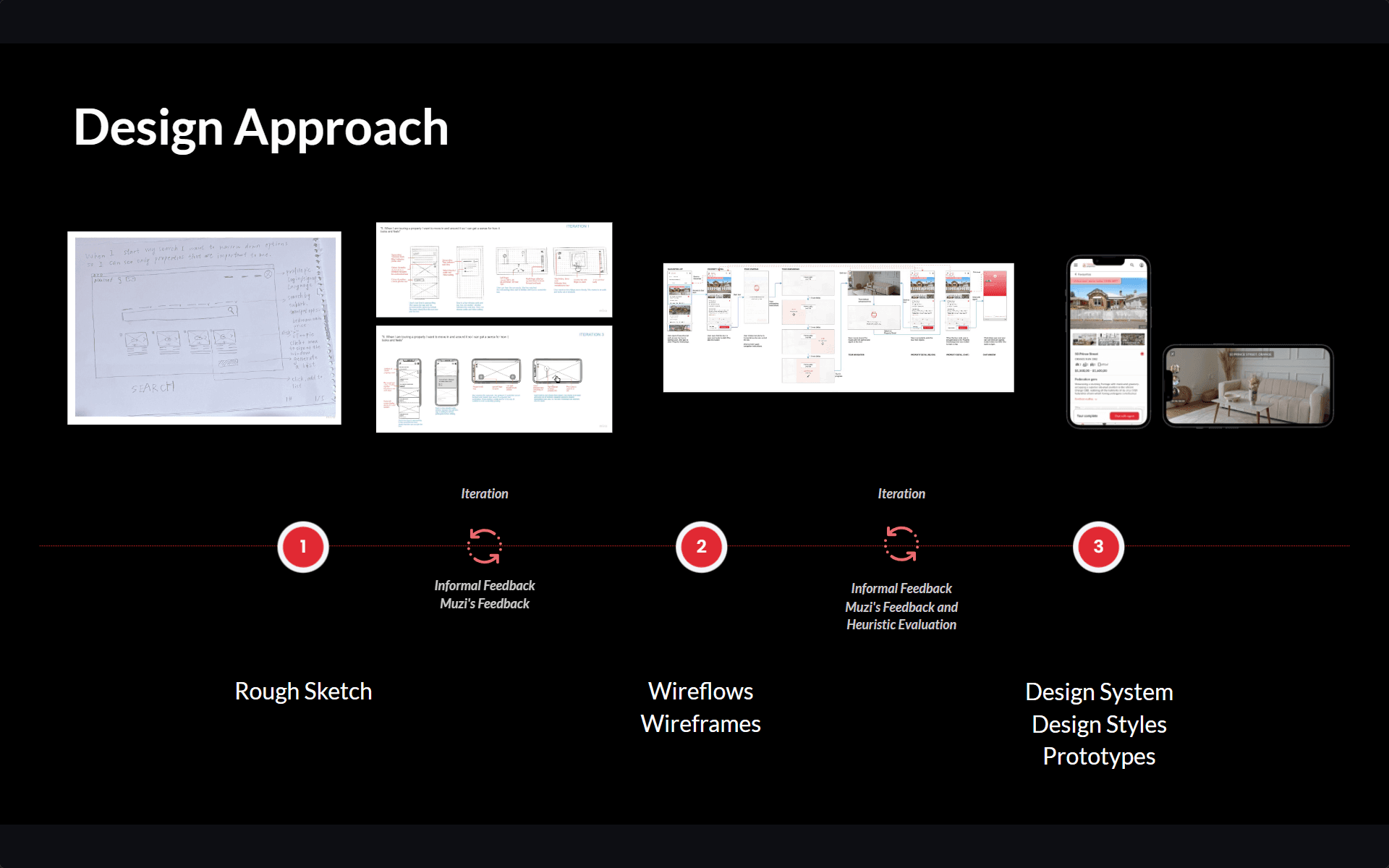
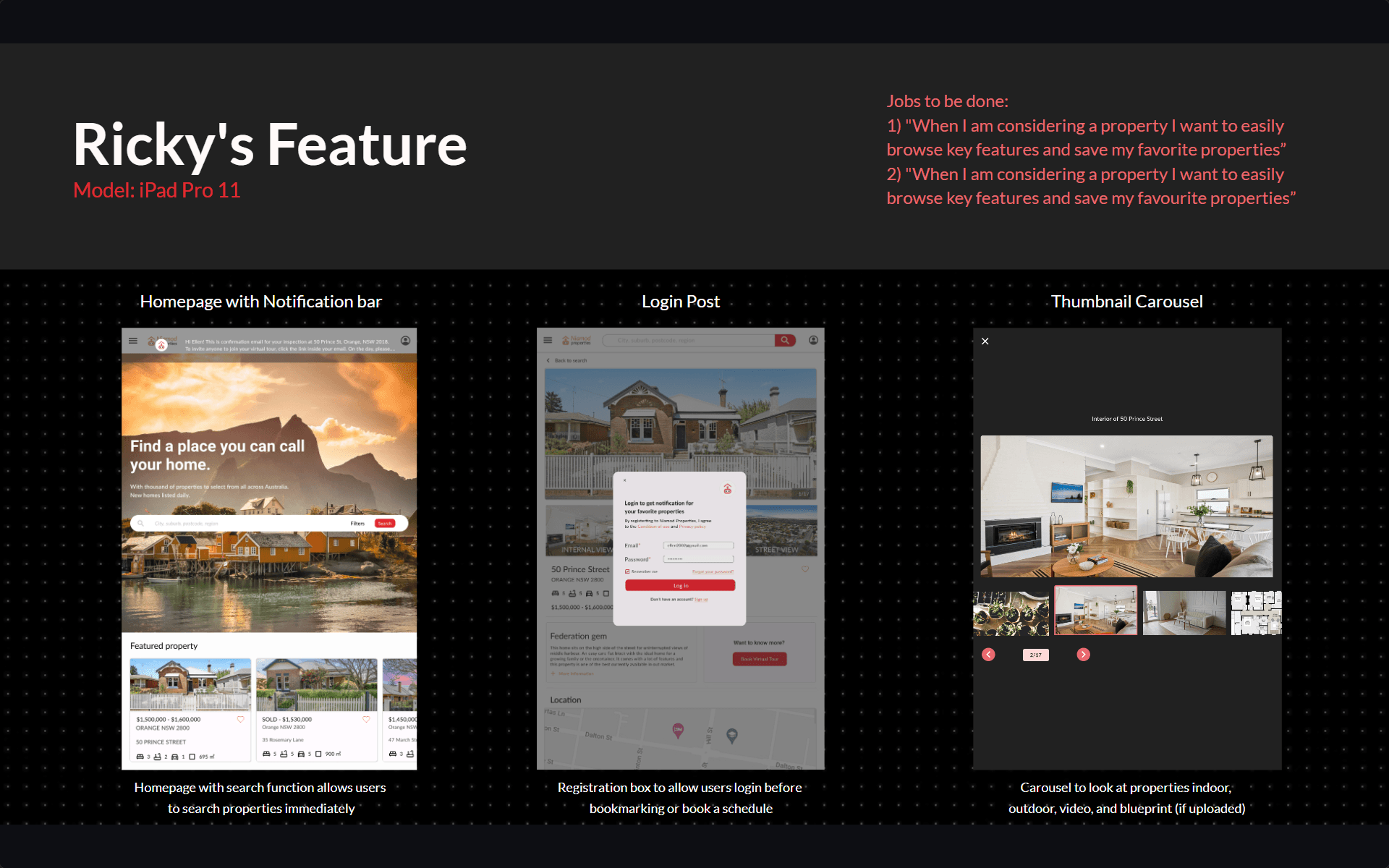
We split the jobs across our team of three and iterated three times: rough sketches, then wireflows and wireframes, then a design system and prototypes, with feedback and a heuristic review between each round. My part covered the first two jobs: a tablet homepage with search and notifications, a login prompt before bookmarking or booking, and a photo carousel for each property.
The concept: interactive 360° tours with property details layered on top, and room to plug in AR/VR, so looking from afar is almost as good as being there.
Top of the class, then in front of the client
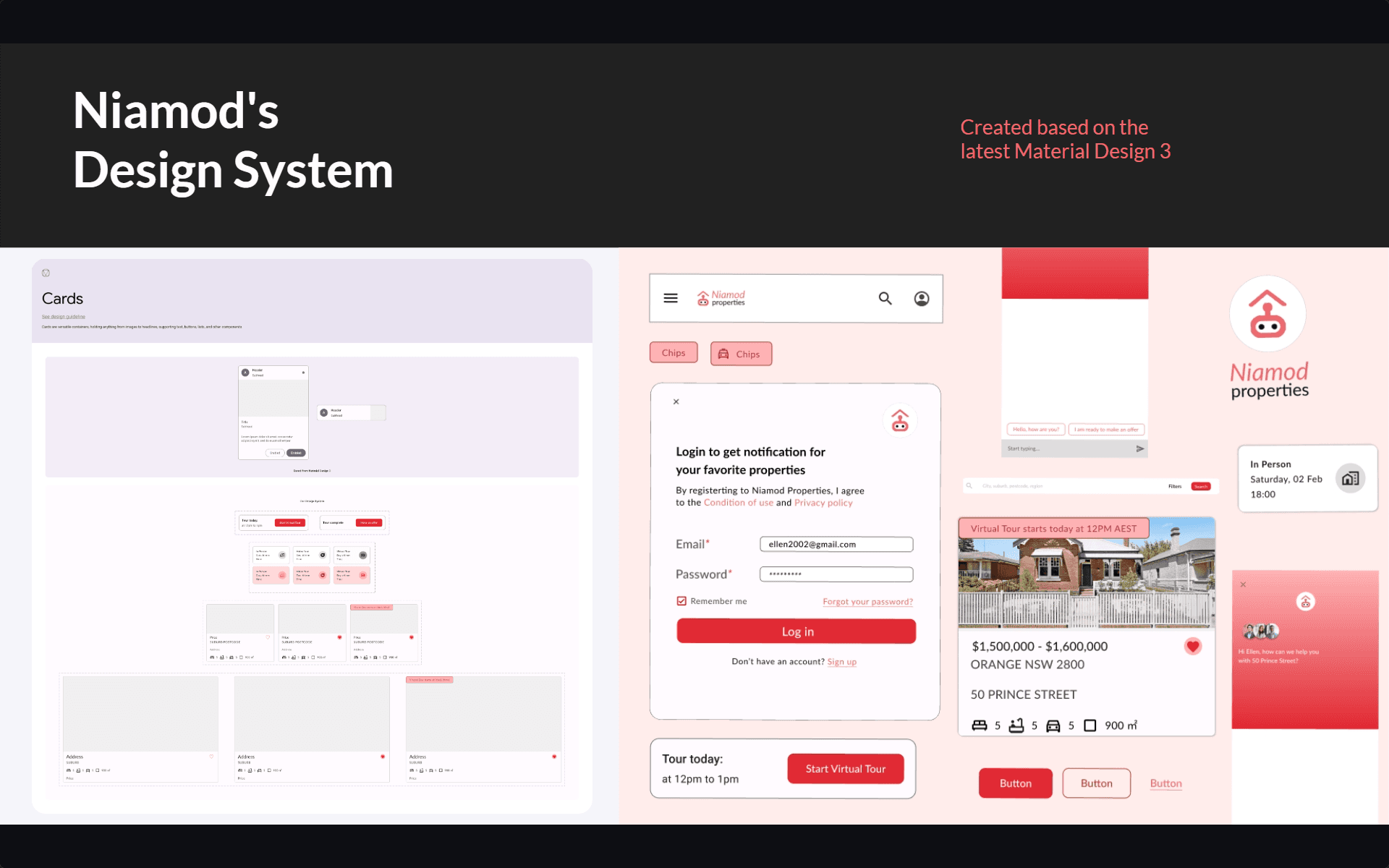
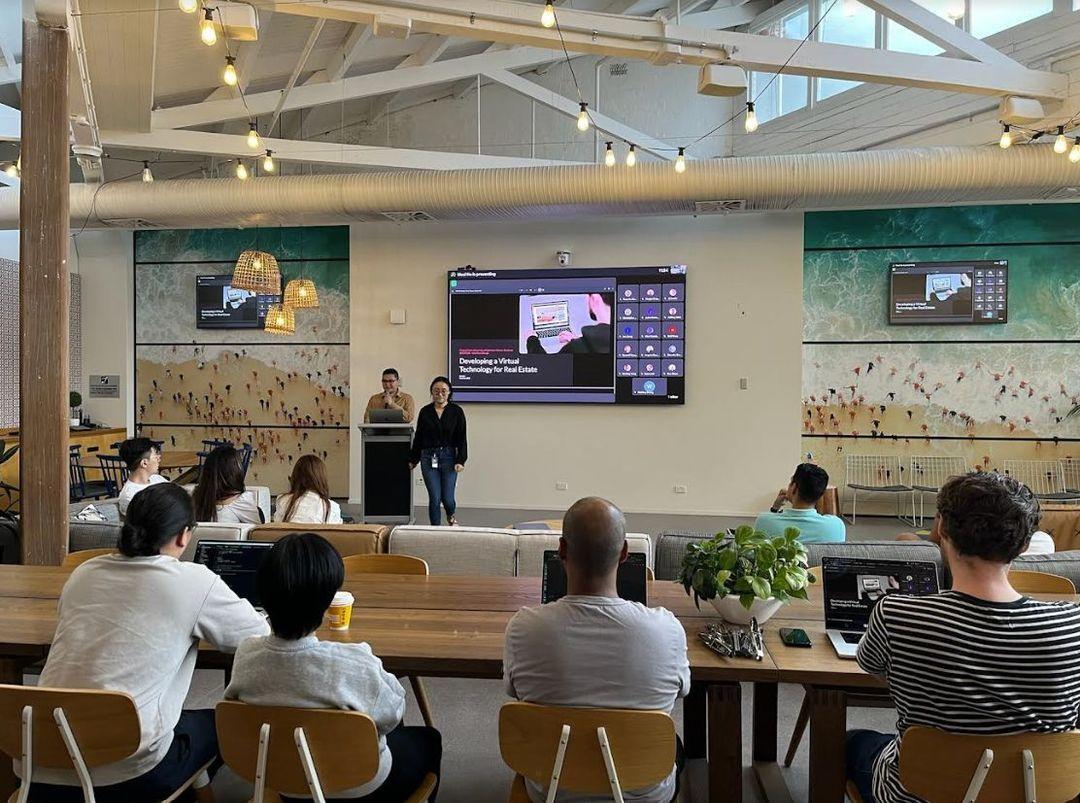
We received the highest mark in the cohort and were invited to present to Niamod Real Estate & Properties. We brought a design system, based on Material Design 3, that could be rolled out across their platform.
The project showed how emerging technology could change the way people view property, making a remote inspection nearly as worthwhile as turning up in person.
The short version
- Market researchTour technology, industry trends and competitors.
- User research5 interviews and online ethnography, 3 personas.
- Jobs to be doneFive jobs for Ellen, split across the team.
- Iterative designSketches, then wireframes, then prototypes.
- Design systemBuilt on Material Design 3.
- Client presentationPresented to Niamod after topping the cohort.